

Drawdown Defined — In Plain Language
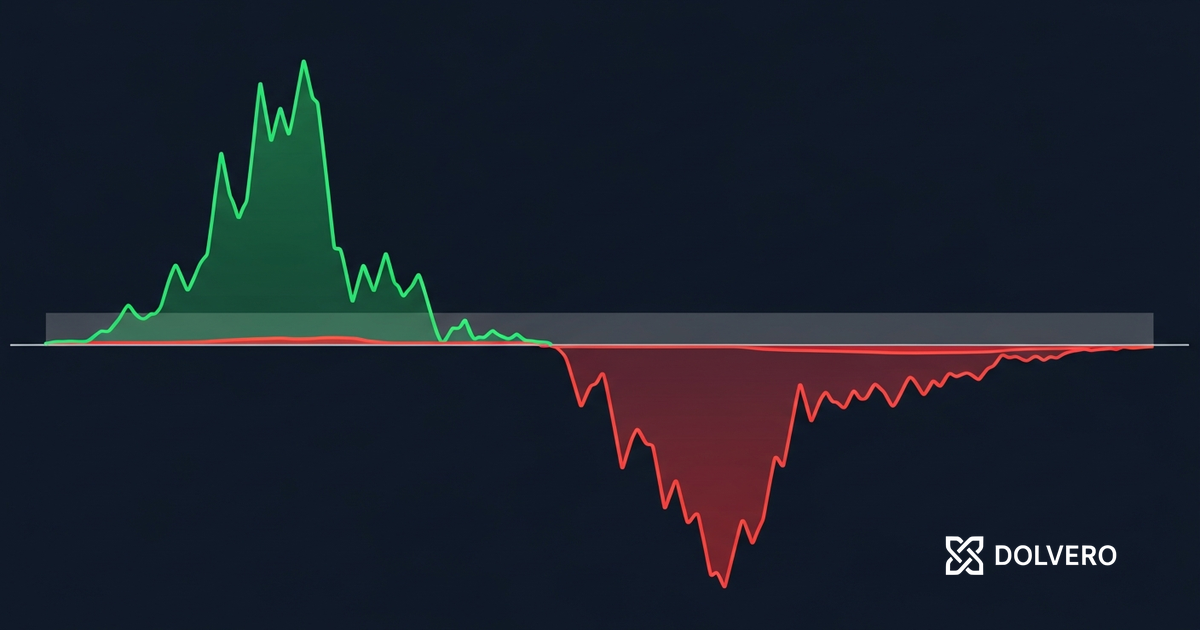
Drawdown is the decline in your account value from a peak to a subsequent low point. If your account reaches $52,000 and then drops to $49,000, you have experienced a $3,000 drawdown, or 6% relative to the starting balance of a $50,000 account. Every professional trader tracks drawdown obsessively because it is the clearest measure of risk exposure at any given moment.
In proprietary trading, drawdown is more than a metric — it is a hard rule. Exceed the maximum drawdown threshold and your account is terminated immediately, regardless of your overall profitability, win rate, or trading history. There are no warnings, no second chances, and no appeals. This is by design: the firm's capital must be protected at all times.
Why Drawdown Matters More Than Profit
New traders almost universally focus on profit targets. How much do I need to make? How fast can I get there? These questions feel important, but they are secondary. The primary question in prop trading is always: how much can I lose before my account is taken away?
Consider two traders on a $100,000 Dolvero evaluation account:
- Trader A makes 2% per week for five weeks, hits the 10% Phase 1 target, and never experiences a drawdown larger than 3%. She passes.
- Trader B makes 15% in the first two weeks but then gives back 11% in week three. Despite being net positive, his account is terminated because he exceeded the 10% maximum drawdown.
Trader B was more profitable at his peak. It did not matter. Drawdown is the survival metric. Profit is what you optimize for after survival is secured.
Static Drawdown vs. Trailing Drawdown
Not all drawdown rules are created equal. The two most common models in the prop trading industry are static and trailing, and the difference between them is enormous.
Trailing drawdown (used by many competitors)
In a trailing model, the drawdown threshold moves up with your highest equity point. On a $50,000 account with a 10% trailing drawdown, your initial floor is $45,000. But if your equity reaches $53,000, the floor moves up to $47,700 (10% below the new high). If equity then reaches $55,000, the floor moves to $49,500. Every new high raises the bar.
The problem is obvious: in a trailing model, a trader who builds a 6% cushion and then has a normal 5% drawdown is suddenly in danger of termination — even though their account is still above the starting balance. Trailing drawdown punishes volatility and can create a paradox where making money actually increases your risk of failure.
Static drawdown (used by Dolvero)
Dolvero uses a static drawdown model. The threshold is fixed at 10% below your initial starting balance and never moves. On a $50,000 account, your floor is always $45,000. It does not matter if your equity reaches $60,000 along the way — the floor stays at $45,000. You can never "outgrow" it, but it can never sneak up on you either.
This model rewards traders who build cushions. Once you are 5% above your starting balance, you have effectively doubled your available drawdown room from a practical standpoint. A temporary losing streak that would terminate you in a trailing model is just a normal part of doing business in a static model.
For a complete breakdown of all risk parameters, visit the Dolvero Rules page.
Daily Loss Limit: The Other Drawdown Rule
In addition to the 10% overall static drawdown, Dolvero enforces a 5% maximum daily loss limit. This is calculated separately from the overall drawdown and resets at the start of each trading day.
On a $50,000 account, you cannot lose more than $2,500 in a single day. If at any point during the trading day your unrealized plus realized losses exceed $2,500, your account is breached. Note that this includes unrealized losses — it is not enough to close your trades before the limit is hit. If your open positions are underwater by $2,500 at any point, even briefly, the breach is triggered.
Why both rules exist
The overall drawdown protects against slow, grinding losses over weeks. The daily loss limit protects against catastrophic single-day events — a revenge trading spiral, a news shock, or a flash crash. Together, they create a two-layer safety net that prevents both gradual erosion and sudden blowups.
How Drawdown Kills Accounts: The Three Patterns
After analyzing thousands of terminated accounts across the prop trading industry, three patterns emerge consistently. Understanding them is the first step toward avoiding them.
Pattern 1: The revenge trade spiral
A trader takes a loss, feels frustrated, and immediately enters a larger position to "make it back." The second trade also loses. Now the trader is down 3-4% on the day, panics, and takes an even larger position. By end of day, the daily loss limit is breached. This pattern accounts for more blown accounts than any other single cause.
The fix is mechanical: after any loss exceeding 1% of your account, stop trading for the day. No exceptions. Your edge does not improve when you are emotionally compromised.
Pattern 2: The slow bleed
A trader takes small, frequent losses — none of them individually alarming, but cumulatively devastating. They lose 0.5% per day for three weeks. Each day feels manageable. But 0.5% per day for 15 trading days is 7.5%, which leaves almost no room before the 10% floor.
The fix is weekly reviews. If you are net negative for two consecutive weeks, reduce your position size by 50% until you are net positive for a full week. For more on position sizing discipline, see How It Works.
Pattern 3: The gap event
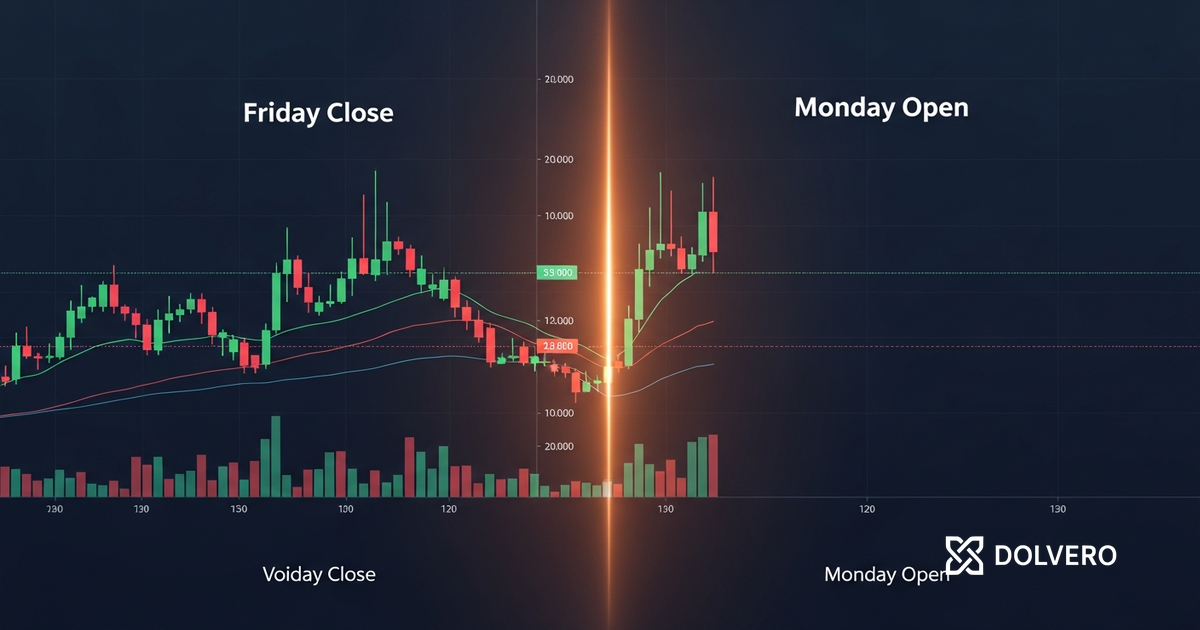
A trader holds a position overnight or through a weekend. The market gaps against them on the open, and their stop loss is filled far beyond the expected level. The daily loss limit is breached before they can react.
Dolvero addresses this directly: weekend holding is prohibited by default. You must close all positions before market close on Friday. This is a protective rule, not a restriction — it prevents exactly this type of catastrophic gap scenario. If your strategy requires weekend holding, the option is available as an add-on, but understand the risk you are accepting. See Pricing for add-on details.
Managing Drawdown Professionally
Professional traders do not just monitor drawdown — they actively manage it as their primary risk metric. Here are the key principles:
The 2% rule
Dolvero enforces a maximum of 2% risk per trade. This is not arbitrary — it is the standard institutional risk management threshold. At 2% per trade, you would need five consecutive losing trades to hit the 10% drawdown limit, and that assumes no winners in between. In practice, any strategy with a win rate above 35% makes five consecutive losses highly unlikely.
Drawdown budgeting
Think of your 10% drawdown as a budget. You do not need to spend it all. Allocate it in phases:
- 0-3% drawdown: Normal operating range. Trade your full plan.
- 3-5% drawdown: Caution zone. Reduce position size by 30-50%. Review your recent trades for pattern breaks.
- 5-7% drawdown: Defensive mode. Trade only your highest-conviction setups at minimum size.
- 7-10% drawdown: Recovery mode. Consider pausing for a few days. When you trade, use the absolute minimum position size.
The equity curve as a tool
Plot your equity curve daily. A healthy equity curve trends upward with shallow, short-lived pullbacks. If your curve shows deep, prolonged drawdowns followed by sharp recoveries, your risk management is inconsistent — you are likely oversizing during drawdowns and reducing size during winning streaks, which is exactly backwards.
Drawdown in the Funded Phase
Everything discussed above applies equally once you are funded. The 10% static drawdown and 5% daily loss limit do not change. The only difference is the stakes: in the evaluation, a breach costs you the evaluation fee. On a funded account, a breach costs you the account and all unrealized profits.
This is why drawdown management is not something you learn for the evaluation and then forget. It is a permanent discipline that defines your career in prop trading. The traders who survive long-term at Dolvero — the ones whose payouts appear consistently on the Public Payout Ledger — are not the ones with the highest returns. They are the ones with the shallowest drawdowns.
Getting Started with the Right Mindset
If you take one thing from this article, let it be this: drawdown is not a constraint on your trading. It is the framework that makes funded trading possible. Without drawdown limits, prop firms could not exist — and without prop firms, most retail traders would never have access to institutional-size capital.
Respect the drawdown. Build your strategy around it. Treat the 10% floor as sacred, the 5% daily limit as non-negotiable, and the 2% per-trade cap as the foundation of every position you take. Do that consistently, and the profit targets will take care of themselves.
Drawdown Across Account Sizes
The beauty of percentage-based drawdown rules is that they scale perfectly. Whether you are trading a $5,000 evaluation or a $200,000 evaluation, the math is identical — only the dollar amounts change. Here is what the 10% static drawdown and 5% daily loss limit look like across Dolvero's account sizes:
- $5,000 account: Drawdown floor at $4,500 (room: $500). Daily loss limit: $250.
- $10,000 account: Drawdown floor at $9,000 (room: $1,000). Daily loss limit: $500.
- $25,000 account: Drawdown floor at $22,500 (room: $2,500). Daily loss limit: $1,250.
- $50,000 account: Drawdown floor at $45,000 (room: $5,000). Daily loss limit: $2,500.
- $100,000 account: Drawdown floor at $90,000 (room: $10,000). Daily loss limit: $5,000.
- $200,000 account: Drawdown floor at $180,000 (room: $20,000). Daily loss limit: $10,000.
The percentages are identical. The psychological experience, however, is not. Losing $250 on a $5K account feels very different from losing $10,000 on a $200K account, even though both represent the same 5% daily loss limit. Choose an account size where the dollar figures feel manageable to you psychologically. You can always scale up later. See Pricing for all available options.
Practical Drawdown Recovery Strategies
Being in drawdown is not a death sentence — it is a signal to adapt. Here are concrete actions to take when your account is in the red:
Step 1: Stop trading immediately
If you have just hit a significant loss, the worst thing you can do is enter another trade in the same session. Walk away from the screen. Review your trades that evening or the following morning with a clear head. The evaluation has no time limit — there is zero cost to pausing.
Step 2: Analyze what went wrong
Was the loss a result of poor execution, poor strategy, or market conditions that were hostile to your approach? If it was execution error (wrong lot size, missed stop loss), fix the process. If it was strategy failure, reassess whether this market environment is right for your edge. If it was hostile conditions (a flash crash, a surprise central bank decision), accept it and move on — some losses are not your fault.
Step 3: Reduce size for the next five trades
After any drawdown exceeding 3%, trade the next five positions at half your normal size. This serves two purposes: it limits further damage if you are still in a losing streak, and it rebuilds confidence without meaningful risk. Once you have five consecutive trades at reduced size with positive expectancy, return to normal sizing.
Step 4: Rebuild to break-even before targeting profit
Do not try to hit your Phase 1 or Phase 2 target while you are in drawdown. Focus on returning to break-even first. This subtle mental shift — from chasing profit to stabilizing — changes your trade selection and sizing in ways that dramatically improve survival odds.
Ready to put disciplined drawdown management to the test? Start your evaluation at app.dolvero.com/start, review the full rule set at Rules, and keep an eye on the Changelog for any updates.